
Sheet Metal Fabrication Equipment Guide for 2026 Industry
Walk into a modern sheet metal factory, and you’ll notice that every finished product—whether it’s an electrical cabinet, a steel door, a machine frame, or agricultural equipment—starts with the same sequence:
Metal Sheet → Cutting → Bending → Welding
Behind these processes are a few key machines that determine not only the quality of the final product, but also productivity, labor requirements, and manufacturing costs.
For manufacturers planning to invest in new equipment, one question always comes first:
Which machines do I actually need to build a competitive production line?
The answer depends on several factors:
- Material type and thickness
- Product complexity
- Production volume
- Labor availability
- Future expansion plans
This guide explores the five essential types of sheet metal fabrication equipment used in modern manufacturing and explains what they do, what they are capable of, and where they fit in real-world production using advanced sheet metal fabrication equipment.
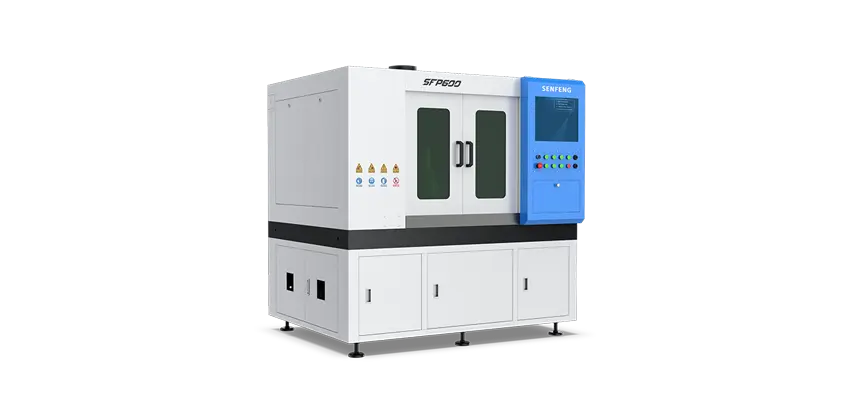
1. Fiber Laser Sheet Cutting Machines: The Foundation of Sheet Metal Fabrication
Nearly every sheet metal product begins its lifecycle as a flat metal blank. Because the cutting stage feeds the rest of your workshop, the throughput of your fiber laser cutter dictates the ultimate capacity of your entire production line.
Modern fiber lasers use high-energy density beams to melt and eject material with extreme precision, producing clean, burr-free edges. This process achieves ultra-precise cuts with a minimal kerf and a virtually nonexistent heat-affected zone (HAZ) , making it a high-performance alternative to traditional plasma and CO₂ laser systems in many applications.
From Flat Sheet to Production Workflow
Every metal product begins as a flat sheet. Whether it is an electrical cabinet, structural frame, agricultural component, or industrial enclosure, the cutting stage determines:
- Overall production speed
- Material utilization rate
- Edge quality for downstream welding
- Labor dependency in the workshop
This is why modern factories no longer choose cutting machines based only on specifications, but on system-level production capacity.
Material Processing Flexibility (Application-Oriented Design)
Instead of relying on fixed performance tables, modern fiber laser machines are configured based on real application needs.
Typical industrial applications include:
- Carbon steel structural parts
- Stainless steel enclosures and panels
- Aluminum components for lightweight structures
- Brass and copper parts (with optimized cutting settings)
Key selection factors include:
- Sheet thickness range required by production
- Required cutting precision and edge quality
- Batch size and automation level
- Factory layout and material flow design
This application-driven approach ensures the machine is not just a “device”, but part of a scalable production system.
The Core Insight: Cutting Efficiency Is a System Result
In modern manufacturing, sheet metal fabrication equipment performance cannot be judged in isolation. One of the most common misunderstandings in laser investment is the belief that “higher power equals higher productivity.”
In reality, cutting efficiency is determined by a combination of:
- Machine motion system performance
- Nesting and programming efficiency
- Automation level (loading / unloading devices)
- Process stability over long production cycles
This means two factories with the same laser power can have completely different output efficiency depending on machine configuration.
SENFENG Cutting Solution
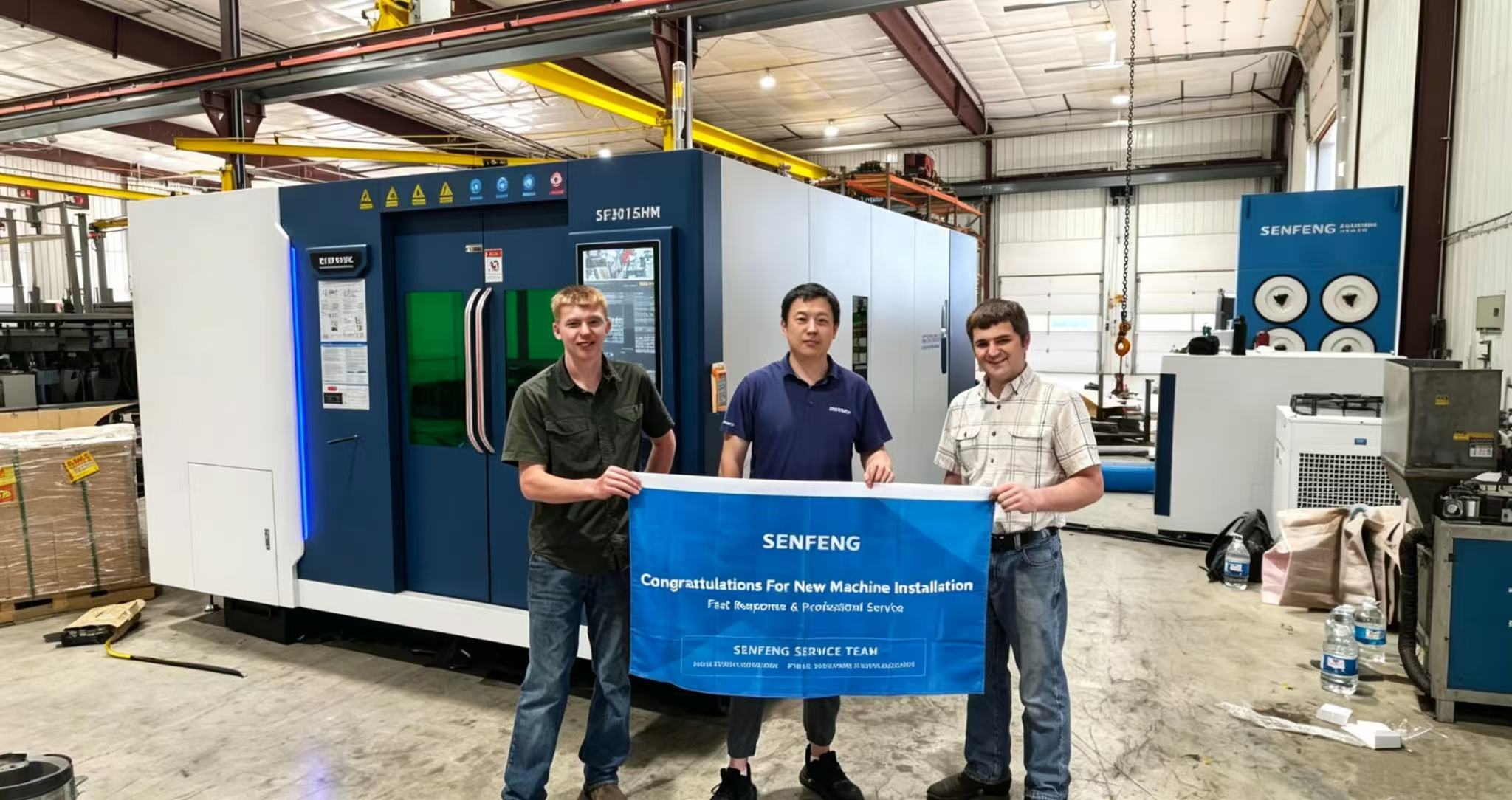
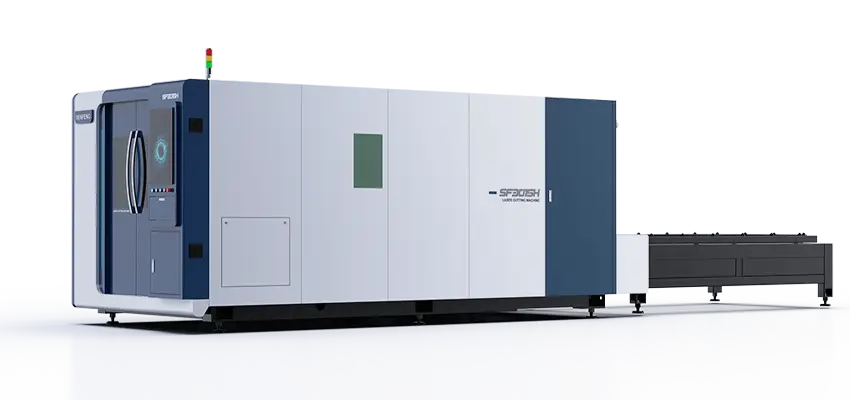
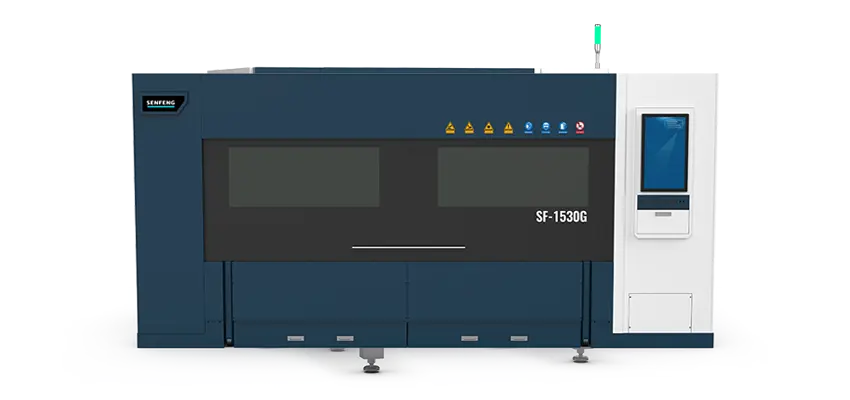
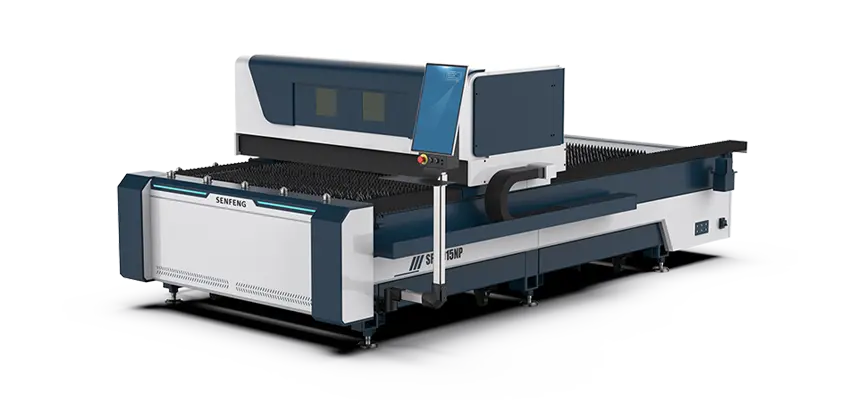
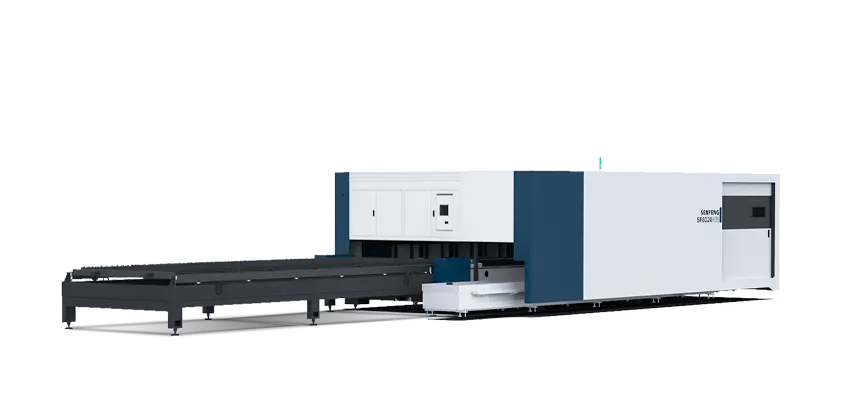
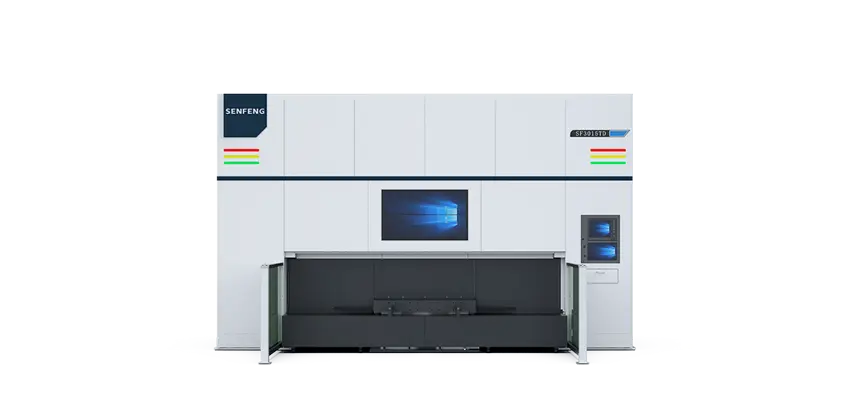
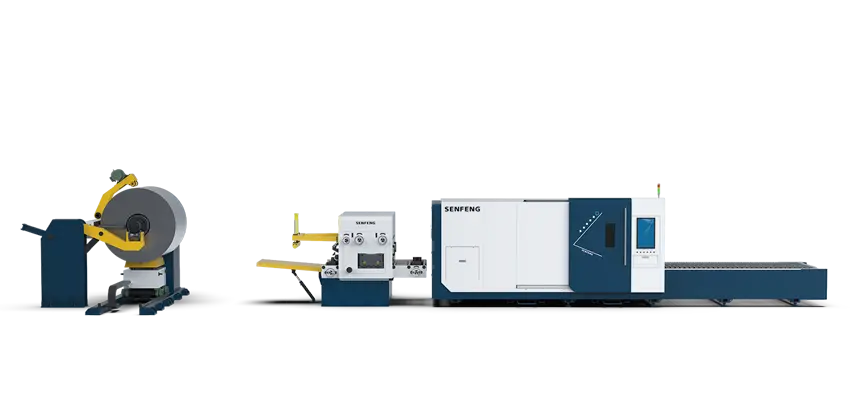
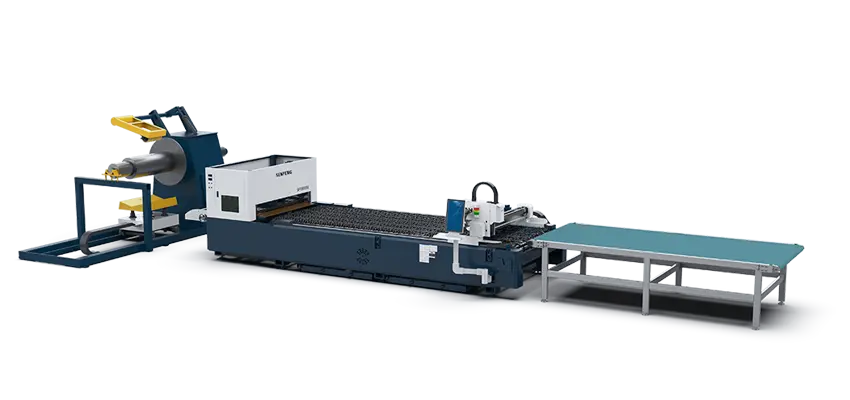
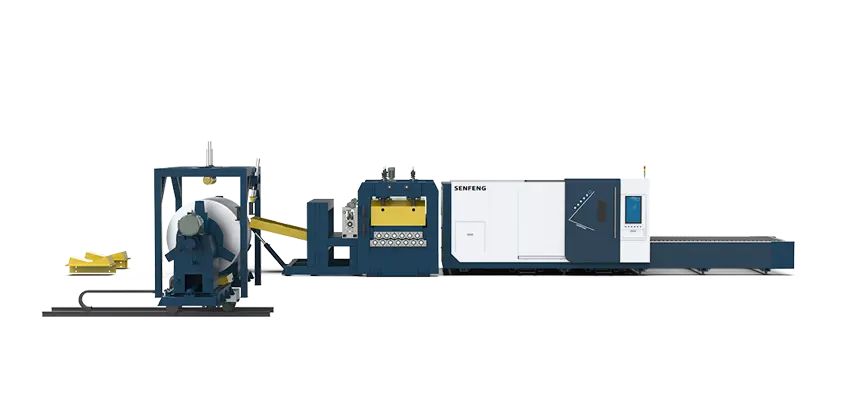
For manufacturers seeking high-efficiency, high-stability, and heavy-duty production capability, SENFENG recommends the SF3015H Ultra-High Power Heavy-Load Laser Cutting Machine as a flagship sheet metal cutting solution.
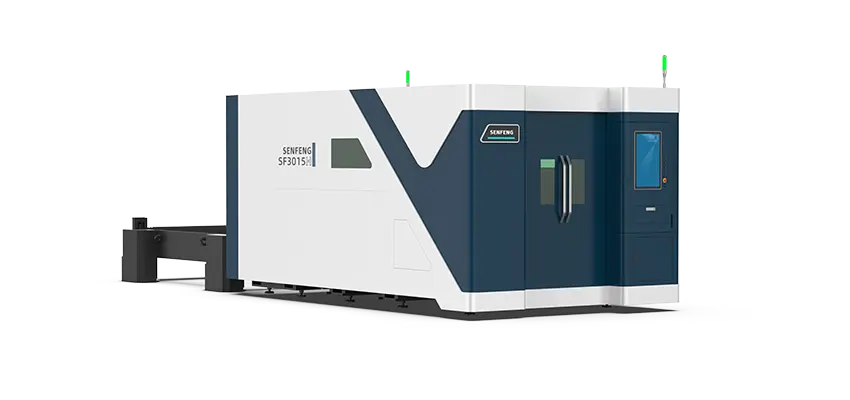
Unlike standard sheet cutting machines, the SF3015H is built on a reinforced heavy-load machine structure, designed to support long-cycle continuous production and high-power laser configurations. It is engineered for manufacturers who require not just cutting capability, but stable production output under demanding industrial conditions.
Key Advantages
- Heavy-Duty Machine Structure for Continuous Industrial Operation
Reinforced bed design ensures long-term stability and precision under high-load, 24/7 production conditions.
- Ultra-High Power Laser Compatibility for Thick Plate Processing
Supports high-power fiber laser configurations for stable cutting of medium and thick metal sheets with consistent quality.
- High-Rigidity Frame with Precision Motion Control
Aviation-grade beam and optimized structure minimize vibration, ensuring long-term cutting accuracy.
- Automation-Ready Design for Smart Factory Integration
Compatible with automated loading/unloading systems to support efficient, scalable production workflows.
Ideal Applications
- High-volume sheet metal fabrication
- Heavy machinery manufacturing
- Industrial equipment production lines
- 24/7 continuous operation environments
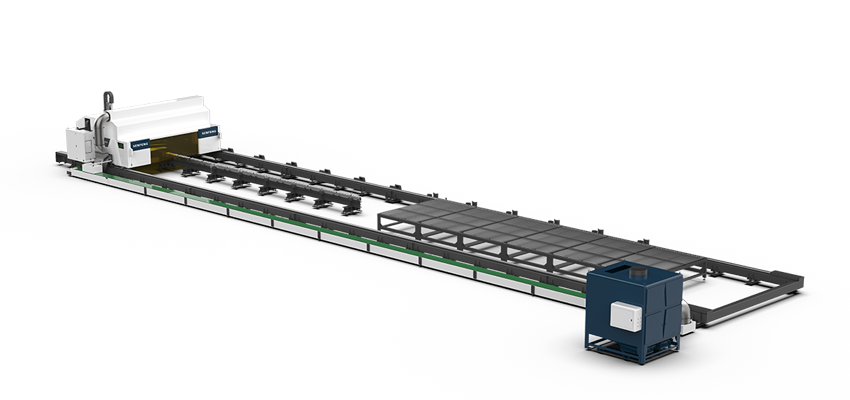
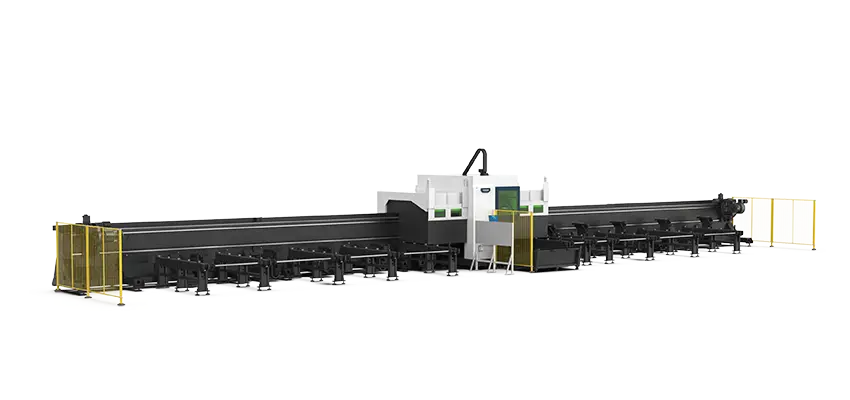
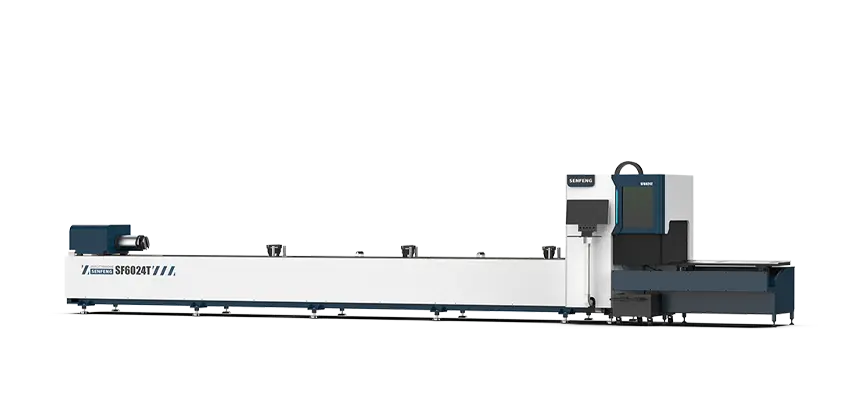
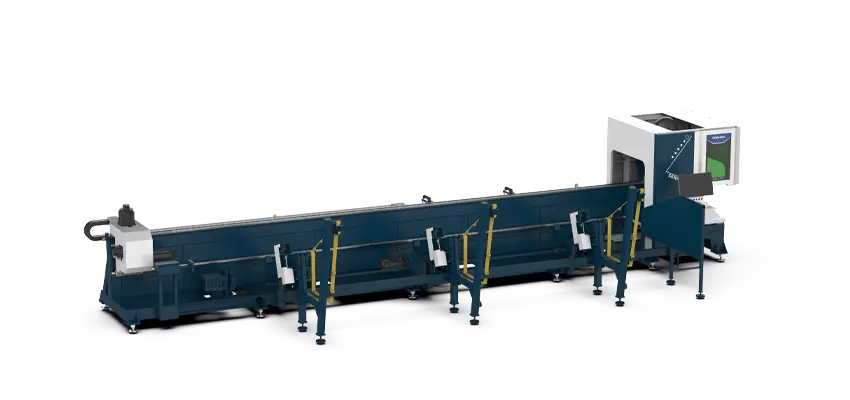
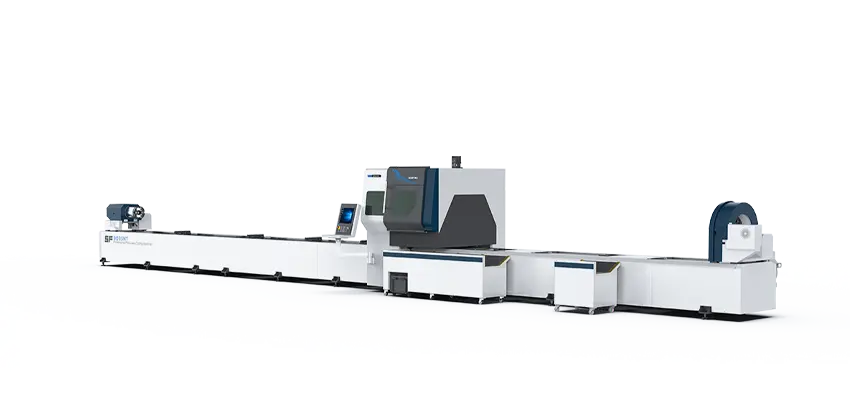
2. Fiber Laser Tube Cutting Machines: One Machine, Multiple Processes
A tube laser cutting machine consolidates traditional multi-step fabrication into a single automated process, significantly improving production efficiency and consistency.
Instead of relying on multiple standalone machines, manufacturers can achieve:
- Higher production efficiency
- Reduced labor dependency
- Improved dimensional accuracy
- Consistent batch quality
- Lower material handling errors
Advanced sheet metal fabrication equipment integration has made tube processing significantly more automated than traditional workflows. This makes tube laser tube cutting a key technology for modern structural manufacturing.
Processable Tube Profiles
Modern tube laser cutters can process:

- Round tubes
- Square tubes
- Rectangular tubes
- Oval tubes
- H-beams
- I-beams
- U-beams
- L-beams
The Core Advantage: Zero-Tail Cutting
One of the most important considerations when selecting a tube laser cutting machine is the chuck configuration. Two-, three-, and four-chuck designs directly affect material utilization and production efficiency. Advanced multi-chuck systems enable true zero-tail cutting, maximizing material usage and significantly reducing raw material costs.
Intelligent follow-up supports prevent tube sagging during processing, while semi-automatic and fully automatic loading devices streamline material handling and support continuous production. These features make modern tube laser cutting machines ideal for applications such as fitness equipment, metal furniture, structural steel fabrication, and agricultural machinery.
SENFENG Tube Solution
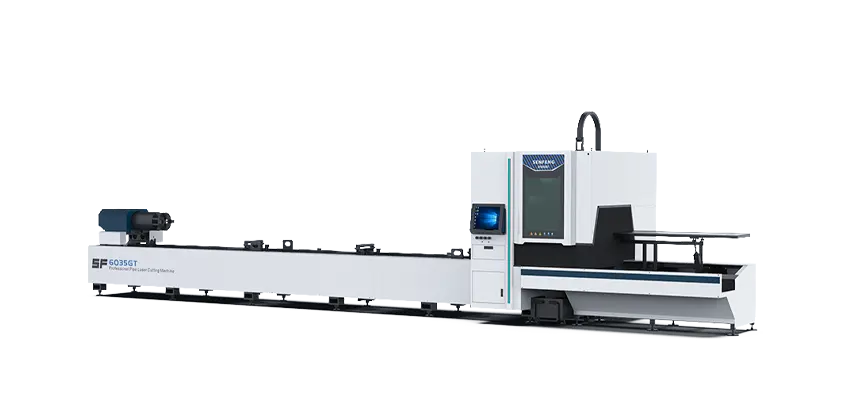
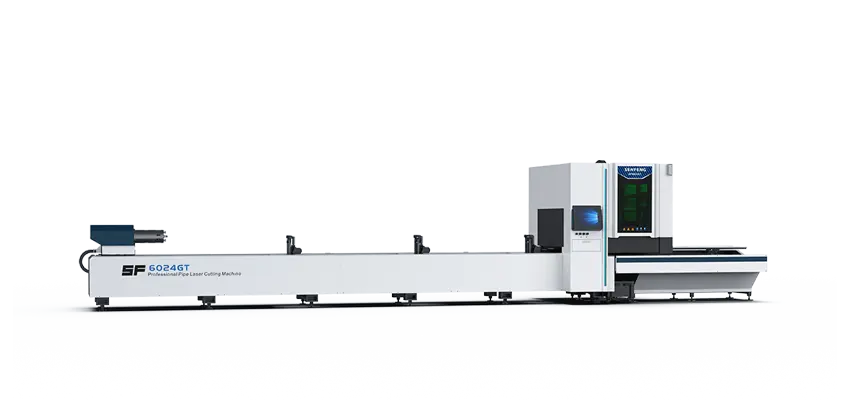
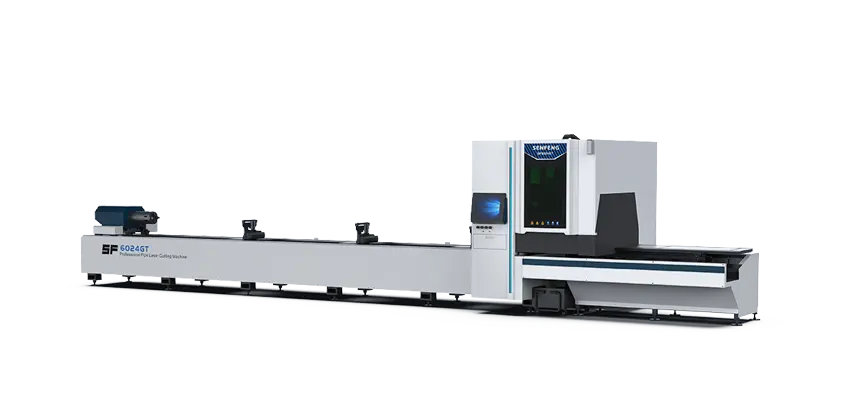
For manufacturers seeking high-precision, high-efficiency, and heavy-duty tube processing capability, SENFENG recommends the Three-Chuck Heavy-Duty Tube Laser Cutting Machine as a core production solution for modern structural tube fabrication.
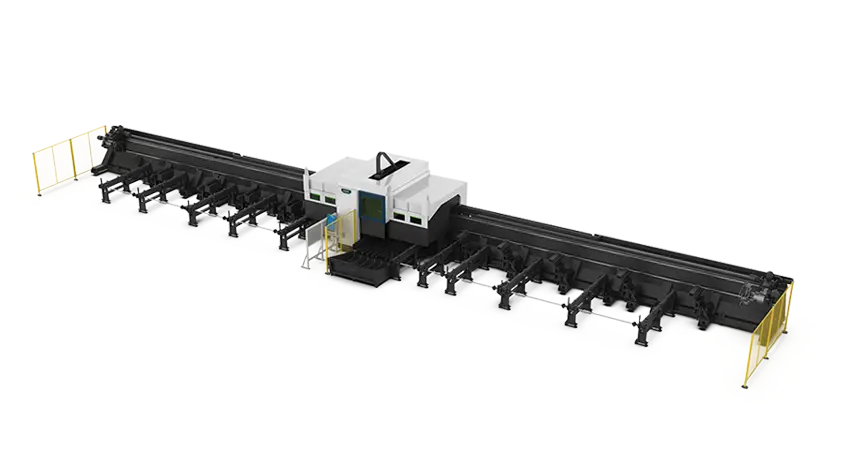
Designed for industrial-scale tube fabrication, the ST Series focuses on stability, efficiency, and high material utilization.
Key Advantages:
- Three-Chuck Heavy-Duty Structure
Ensures stable clamping of long and heavy tubes, significantly improving cutting stability and precision during high-speed operation.
- True Zero-Tail Cutting
Advanced chuck coordination enables efficient material usage, minimizing waste and reducing overall raw material cost per part.
- High Rigidity Machine Design
Reinforced frame structure improves vibration resistance, ensuring consistent cutting accuracy even under heavy-load processing conditions.
- Intelligent Tube Follow-up Support Device
Follow-up support prevents tube deformation and sagging, maintaining stable positioning during long-tube processing.
- Automation-Ready Configuration
Compatible with semi-automatic and fully automatic loading devices, supporting continuous production workflows and reducing manual handling.
Typical Applications
- Fitness equipment structures
- Metal furniture frames
- Agricultural machinery
- Structural steel components
3. CNC Press Brakes: The Most Flexible Bending Equipment
After cutting comes bending. Flat sheets are transformed into cabinets, channels, machine covers, brackets, and structural components.
No matter how advanced laser cutting becomes, bending remains one of the most important processes in sheet metal fabrication.
Why Press Brakes Are So Widely Used
The main advantage is flexibility.
A single machine can produce:
- Electrical cabinets
- Fire doors
- Elevator panels
- Truck bodies
- Agricultural machinery parts
- Construction equipment components
By simply changing tooling, manufacturers can quickly switch between different products quickly.
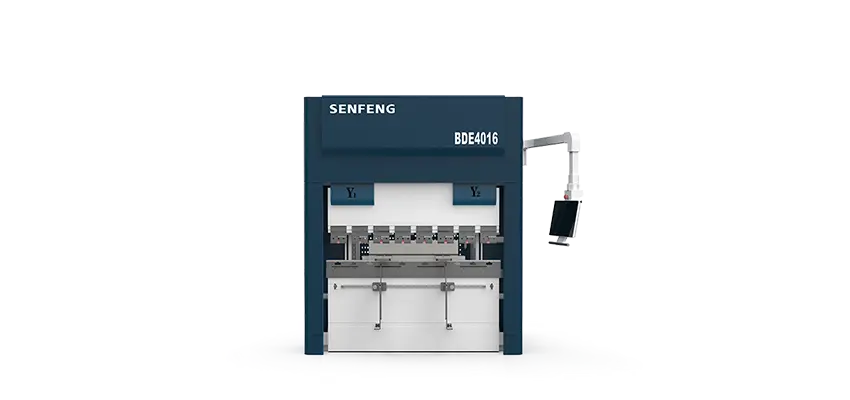
Modern CNC systems (such as DA-66T controllers) ensure high repeatability, precise angle control, and consistent batch production quality.
SENFENG Bending Solution
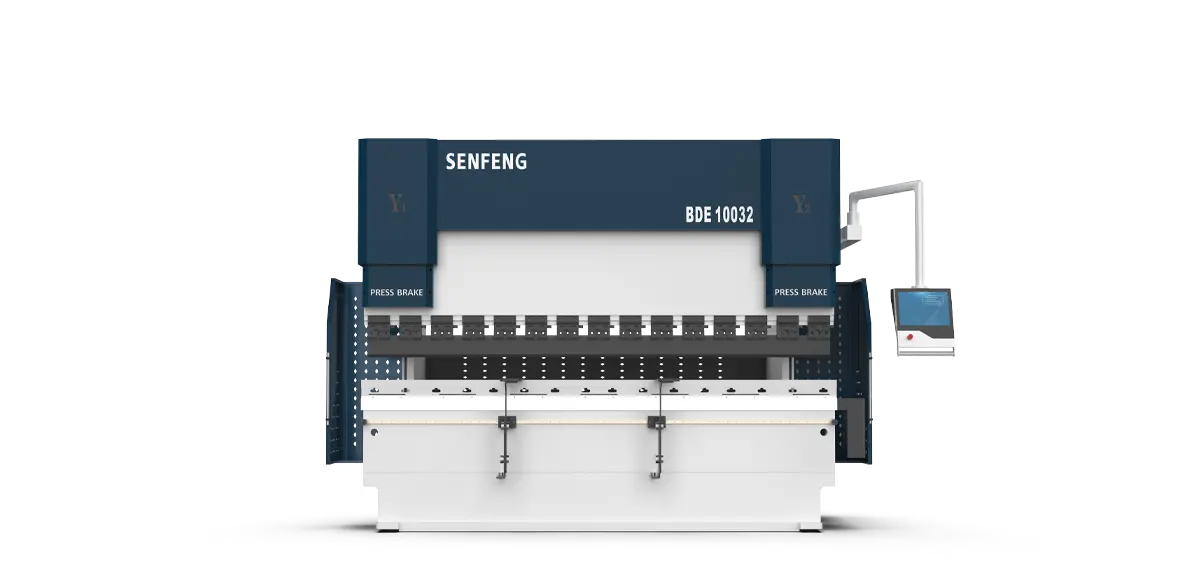
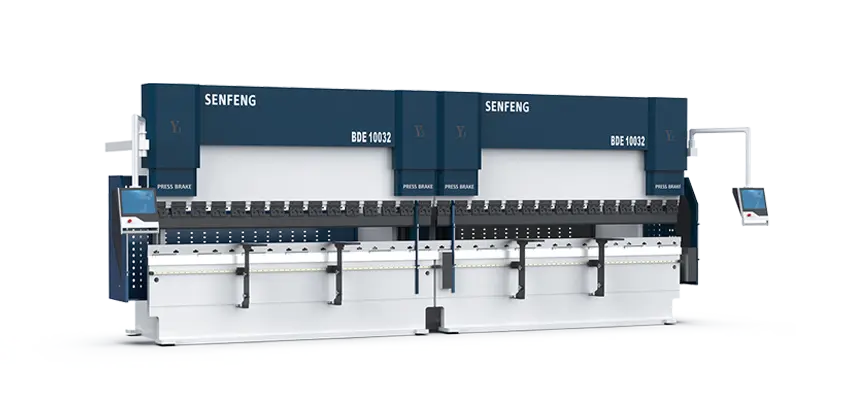
For manufacturers seeking high precision, high consistency, and automated bending capability, SENFNEG recommends the Robot-Assisted CNC Bending Machine BDE10032 as an advanced forming solution for modern sheet metal production.
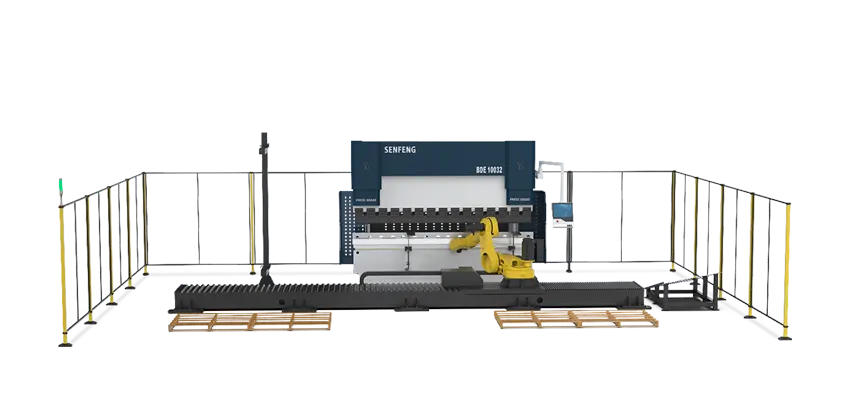
This machine integrates CNC bending technology with robotic automation, enabling manufacturers to achieve higher production efficiency, reduced labor dependency, and stable batch consistency in complex sheet metal forming operations.
Key Advantages
- Robot-Assisted Bending Automation
The integrated robotic system reduces manual handling, improving production efficiency and ensuring consistent bending accuracy across large batch runs.
- High Precision CNC Control System
Advanced CNC control enables precise angle adjustment and repeatable forming quality, even for complex geometries and multi-step bending processes.
- Reduced Operator Dependency
Automation significantly lowers skill requirements for operators, making production more stable and less dependent on manual experience.
- High Repeatability for Batch Production
Ensures consistent bending results across large production volumes, improving overall product quality and reducing rework rates.
- Flexible Tooling Compatibility
Supports rapid tooling changes, allowing manufacturers to switch between different product types efficiently.
4. Flexible Panel Benders: Build for Speed and Automation
While press brakes focus on flexibility, panel benders focus on automation and productivity.
Panel benders are especially popular among manufacturers producing:
- Electrical cabinets
- Server racks
- Steel lockers
- Office furniture
- Elevator panels
The Decision Matrix: CNC Press Brake vs. Flexible Panel Bender
Different types of sheet metal fabrication equipment are designed for distinct bending strategies, depending on production goals.
| Comparison Factor | CNC Press Brake | Flexible Panel Benders |
| Tooling Requirements | Requires punch and die tooling, with tool changes based on part geometry. | Uses universal bending tools, minimizing or eliminating tool changes. |
| Material Capability | Handles a wide range of materials and thicknesses, including heavy-gauge plates. | Optimized for thin-gauge sheet metal applications. |
| Productivity | Throughput depends on operator handling and part complexity. | High productivity, especially for multi-sided folds and batch production. |
| Automation Level | Operator involvement is needed for positioning and rotating parts. | Integrated automation reduces manual handling and ensures consistent results. |
| Ideal Applications | Heavy brackets, structural components, deep channels, and custom parts. | Cabinets, electrical enclosures, panels, lids, and box-shaped components. |
If your workshop manufactures server racks, steel lockers, fire doors, or commercial appliance housings, a panel bender enables fully automated multi-bend processing without manual tool changes, reducing reliance on highly skilled operators and improving production consistency.
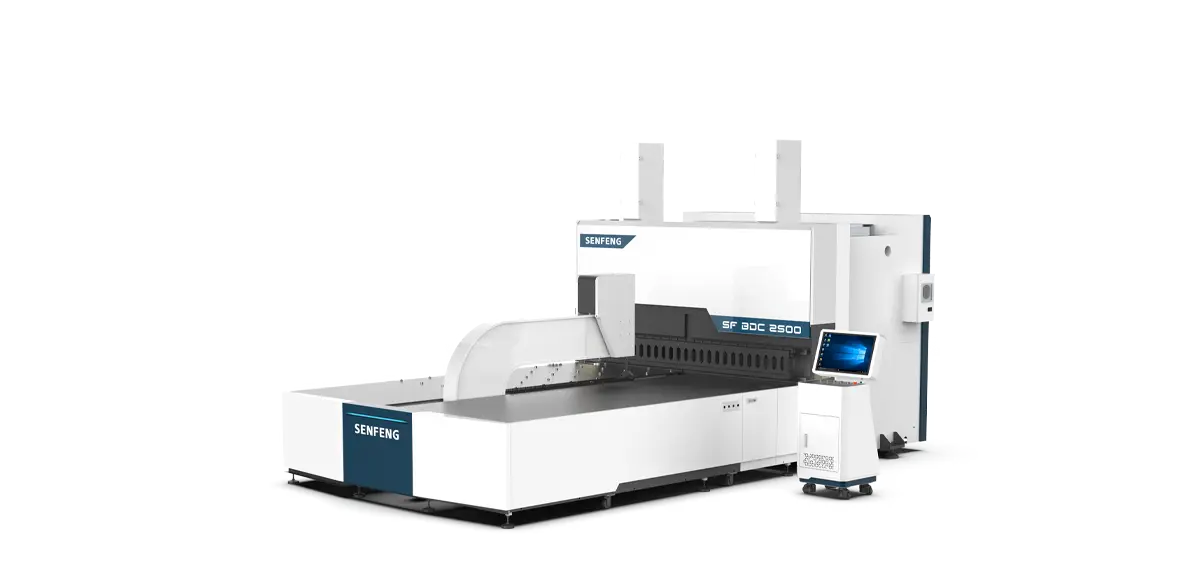
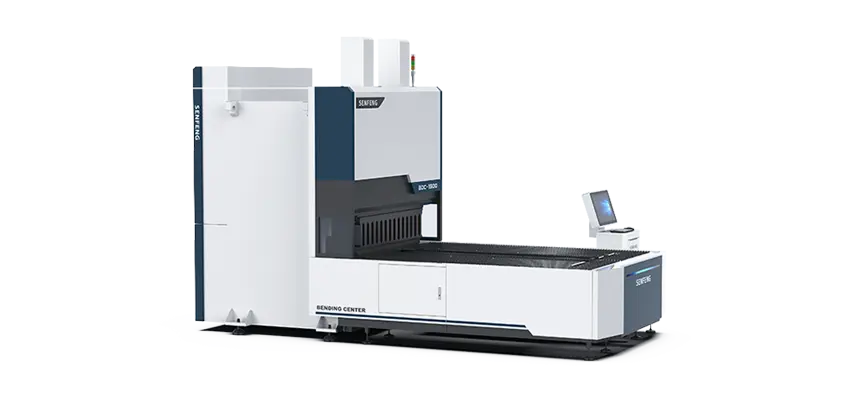
SENFENG Bending Automation Solution
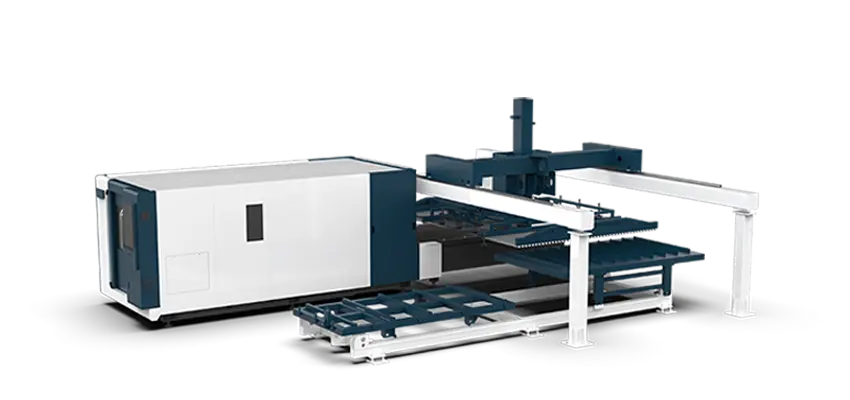
To support high-volume and highly consistent sheet metal production, SENFENG offers a Push-Down Automatic Loading and Unloading Panel Bender solution, designed as a fully integrated bending automation cell.
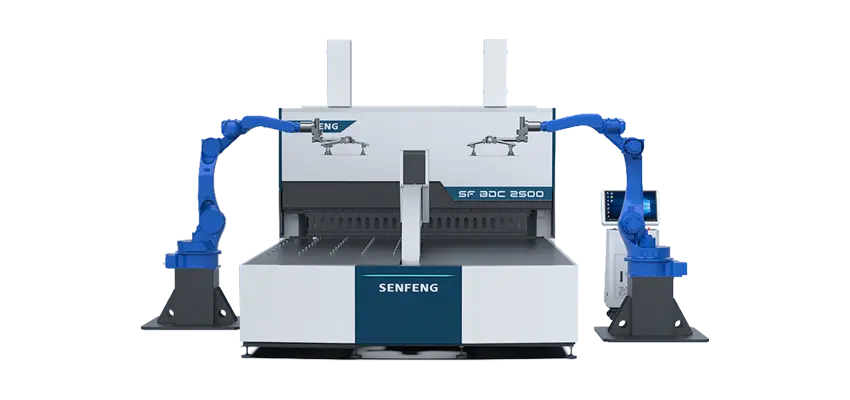
This machine integrates automatic loading, bending, and unloading processes into one continuous workflow, significantly reducing manual intervention and improving production stability.
Key Advantages:
- Fully Automated Loading & Unloading
Sheet material is automatically handled through the entire bending cycle, reducing operator dependency.
- High-Speed Multi-Side Bending
Complex box-type parts can be formed in a single continuous workflow without manual repositioning.
- Consistent Batch Quality
Automated process control ensures uniform bending results across large production volumes.
- Reduced Labor Requirements
Minimizes the need for highly skilled operators, lowering long-term labor costs.
- Stable Production for Standardized Parts
Ideal for repetitive manufacturing of cabinets, enclosures, and panel-based structures.
5. Industrial Welding Machines: Elevating Structural Integrity
The final major operation in sheet fabrication is joining components permanently. The industry is experiencing a clear shift from traditional welding methods to high-efficiency laser-based systems.
(1) Fiber Laser Welding Machine
Fiber laser welding utilizes a highly concentrated, high-energy laser beam to create deep and narrow weld seams with minimal heat input. This low thermal impact effectively reduces part distortion and warping.
More importantly, it produces smooth, spatter-free welds, eliminating the need for secondary grinding or polishing.
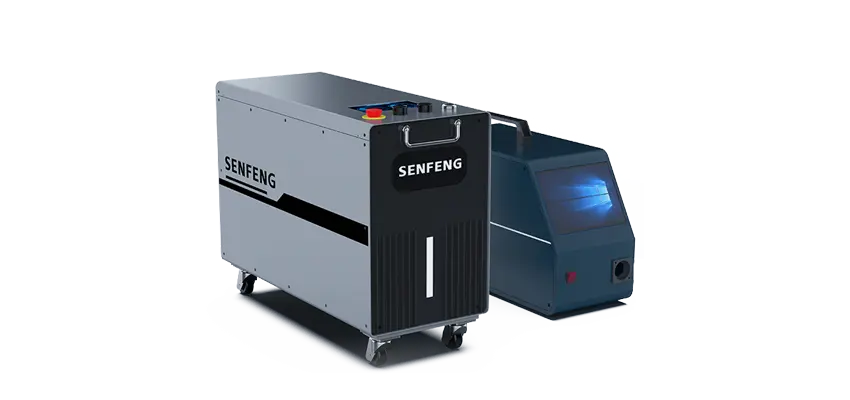
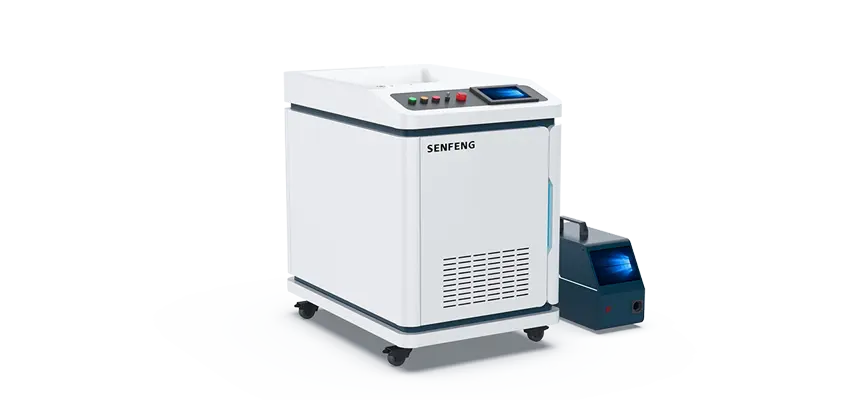
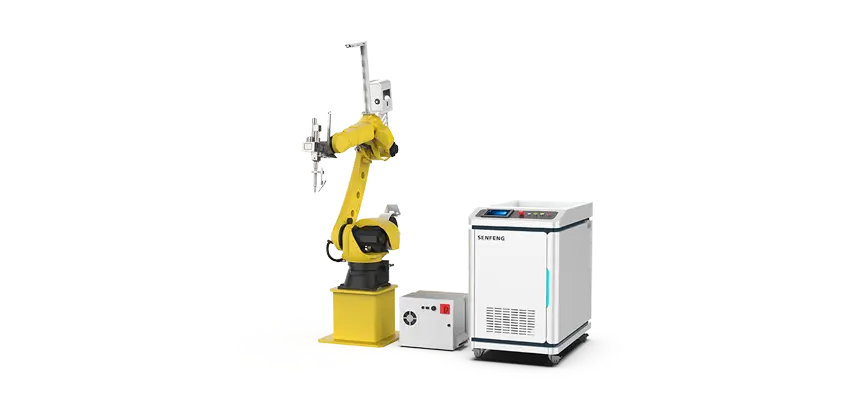
Modern handheld laser welding systems often feature 4-in-1 functionality, allowing operators to switch between welding, rust removal, manual cutting, and weld seam cleaning using a single handheld torch.
SENFENG Welding Solution
HWM Series: 4-in-1 Flexible Processing Capability
To support flexible and high-efficiency metal joining across different production environments, SENFENG offers the Handheld Fiber Laser Welding Machine HWM Series, designed for multi-process metal fabrication applications.
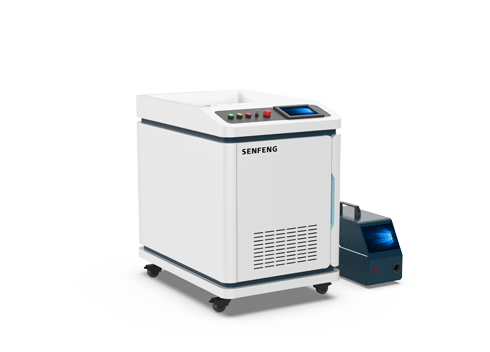
Unlike traditional welding equipment, the HWM Series integrates multiple functions into one handheld platform:
- Laser welding
- Laser cutting
- Laser cleaning (rust / oxide removal)
- Weld seam cleaning
This multi-function design allows manufacturers to handle multiple production tasks using a single machine, significantly improving workshop flexibility and equipment utilization.
Key Advantages
- High-Speed Welding Efficiency
Laser welding significantly improves processing speed compared to traditional arc welding methods, making it suitable for modern production environments with tight delivery schedules.
- Low Heat Input & Minimal Distortion
The concentrated laser energy reduces thermal impact, helping maintain material integrity and reducing deformation after welding.
- High-Quality Weld Appearance
Produces clean and smooth weld seams with minimal spatter, reducing or eliminating the need for secondary grinding or polishing.
- Easy Operation & Low Skill Requirement
The handheld design lowers the operational barrier, allowing faster operator training and reducing dependence on highly skilled welders.
- Flexible Application Scenarios
Suitable for both precision components and structural parts across different production environments.
Application Scenarios
The HWM Series is widely used in industries requiring flexible and high-quality metal joining:
- Steel doors and security structures
- Electrical cabinet manufacturing
- Kitchen and stainless steel equipment
- Metal furniture production
- Automotive and component fabrication
- Elevator and structural panel assembly
(2) Arc Welding Machine (MIG/MIG Welding)
For heavy structural components, thick frames, or applications with wider assembly tolerances, traditional MIG/MAG arc welding remains an essential process.
Modern microcontroller-based pulsed arc systems reduce heat input by approximately 25% and lower shielding gas consumption by up to 40%, improving efficiency and cost control.
These systems are widely used in demanding industries such as agricultural machinery and construction equipment manufacturing.
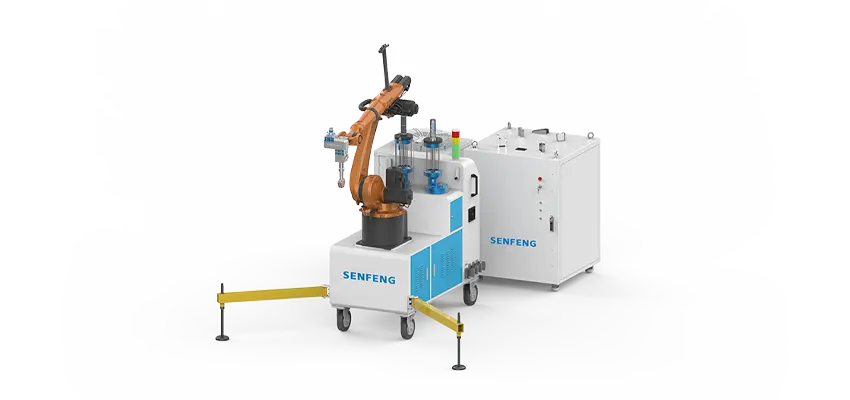
SENFENG RMW Series: Teaching-Free Robotic Arc Welding Machine
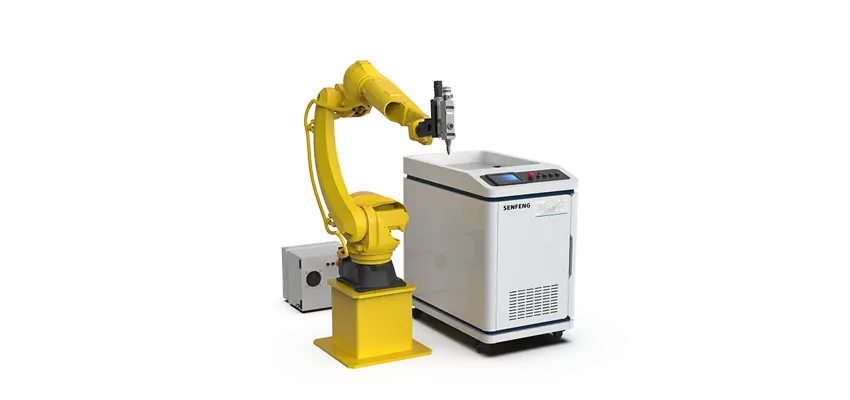
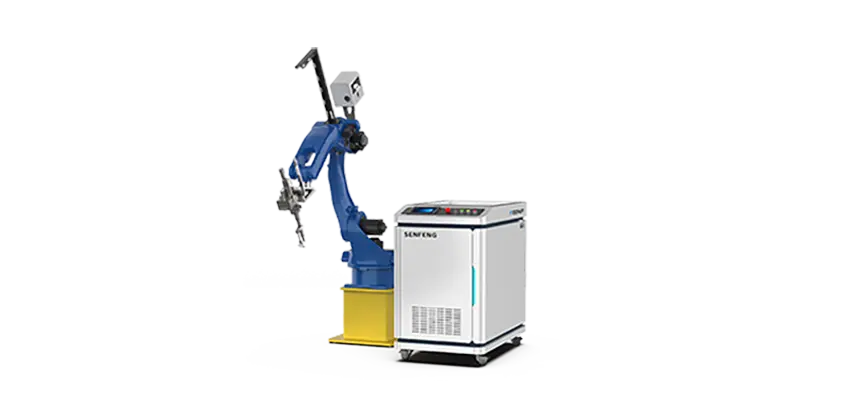
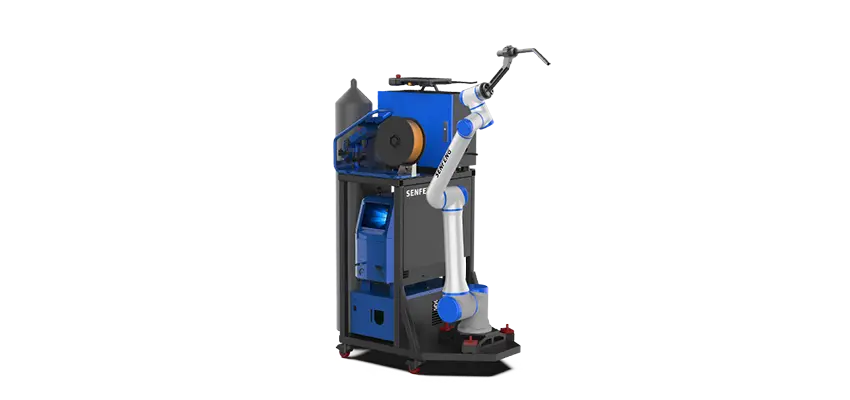
To support high-mix, medium-to-high volume welding production, SENFENG offers the RMW Series Teaching-Free Robotic Arc Welding Machine, designed as a flexible and intelligent welding automation solution.
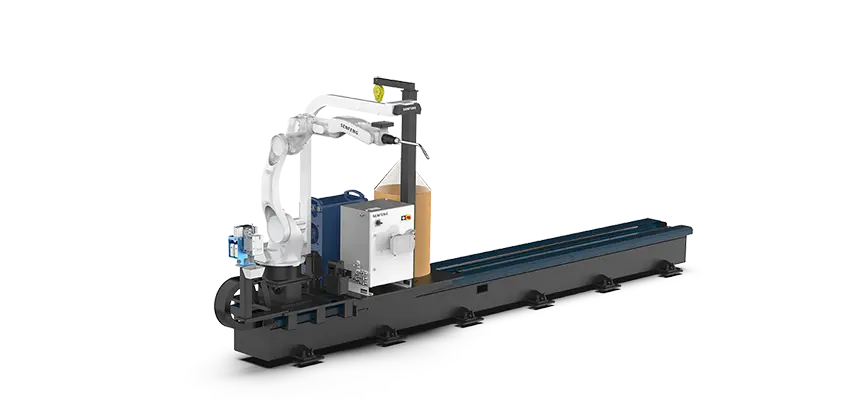
The RMW Series integrates an industrial robot arm with an intelligent arc welding system, enabling automatic seam tracking and teaching-free operation, which significantly reduces programming time and operator dependency.
This make it especially suitable for manufacturers that require fast deployment and flexible production switching across multiple welding tasks.
From Manual Welding to Intelligent Robotic Welding Machines
Unlike traditional welding setups that rely heavily on operator skill, modern robotic welding machines standardize the entire welding process through automation.
A typical robotic welding solution integrates:
- 6-axis industrial robot arm
- MIG/MAG arc welding power source
- Intelligent seam tracking system
- Workpiece positioning and fixture device
- Control cabinet and safety device
This structure enables consistent welding quality across large batch production while maintaining flexibility for different product types.
Key Advantages:
- Teaching-Free Operation
The machine can automatically identify welding paths, significantly reducing programming time and eliminating complex manual teaching processes.
- High Adaptability for Complex Workpieces
Suitable for irregular shapes and multi-position welding tasks that are difficult to handle with traditional manual or semi-automatic welding methods.
- Wide Material Compatibility
Supports carbon steel, stainless steel, galvanized sheet, and other commonly used industrial metals.
- Stable Welding Quality
Robotic arc control ensures consistent welding performance, reducing common defects such as undercutting, spatter, and inconsistent penetration.
- Reduced Labor Dependency
Operators no longer need advanced welding programming skills, lowering overall labor costs and training requirements.
Industry Applications
- Steel Doors & Security Products
Provides stable and repeatable weld seams for high-volume door frame and security structure production.
- Electrical Cabinet Manufacturing
Ensures consistent welding quality for enclosures, reducing post-weld correction and grinding.
- Metal Furniture Production
Improves welding consistency for frames, shelves, and modular furniture systems.
- Automotive & Structural Components
Suitable for chassis parts and load-bearing structural assemblies requiring stable weld quality.
- Elevator Panels & Industrial Equipment
Delivers precise and uniform welding for large sheet-based assemblies.
Final Thoughts
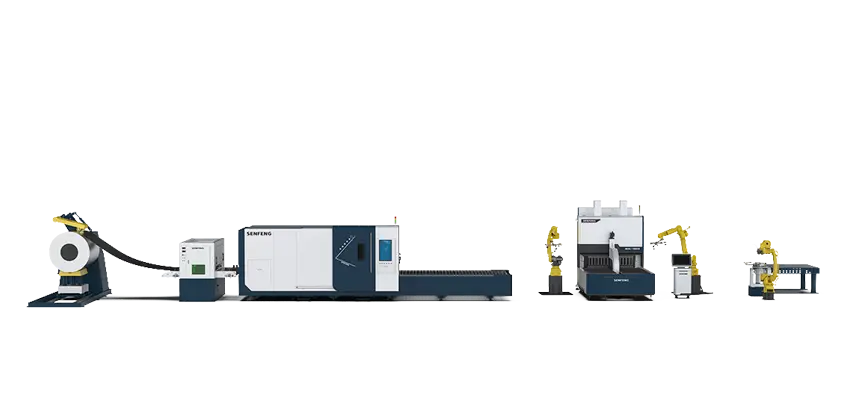
Modern sheet metal fabrication efficiency is no longer defined by a single machine, but by the integration of cutting, forming, and welding systems.
Instead, productivity depends on how effectively cutting, forming, and joining technologies work together.
For some manufacturers, a fiber laser cutter and a press brake are sufficient.
For others producing thousands of cabinets every month, combining a sheet laser, panel bender, and laser welding machine can significantly increase output while reducing labor requirements.
The best investment is not necessarily the most expensive machine.
It is the combination of equipment that matches your products, material thickness, production volume, and long-term growth strategy.
Understanding the capabilities of each type of sheet metal fabrication equipment is the first step toward building a more efficient, scalable, and competitive sheet metal manufacturing operation powered by modern sheet metal fabrication equipment solutions.