
Single Table vs Exchange Table Fiber Laser Cutter: Understanding Real Production Throughput
In most sheet metal workshops, the true difference between fiber laser cutting machines is not immediately visible during setup or even during the first few cutting jobs. Both single table and exchange table fiber laser cutters will produce identical parts, follow the same cutting path, and achieve the same precision level on the first sheet. From a purely technical standpoint, they appear almost equivalent.
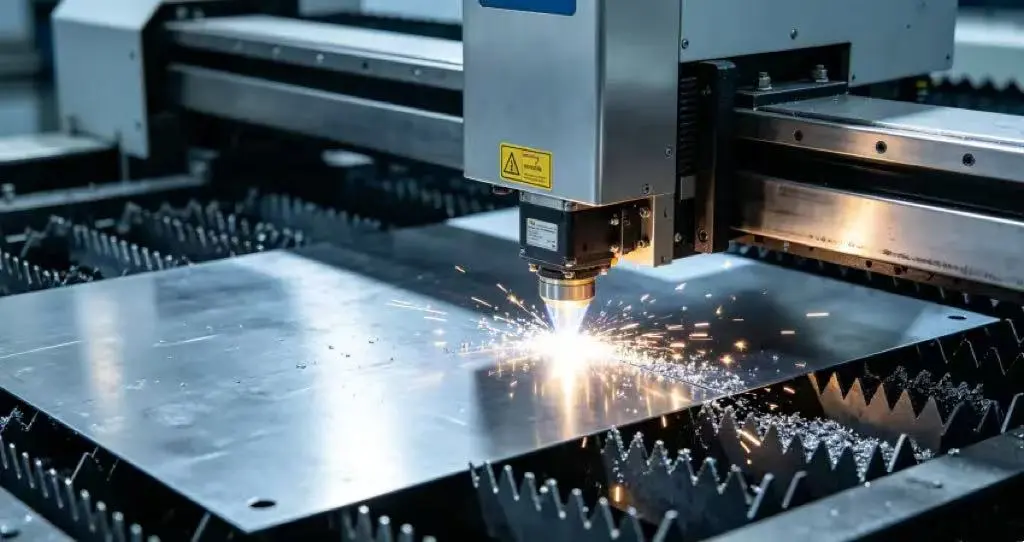
However, once production begins to run continuously over several hours, the difference becomes measurable not in cutting performance, but in how much of the working time is actually spent cutting versus waiting.
In real manufacturing environments, especially in job shops and medium-volume production lines, a typical laser cutting cycle is not defined by a single sheet, but by repeated cycles of loading, cutting, unloading, and preparation. When this cycle is repeated 30-80 times per shift depending on sheet size and part complexity, even small inefficiencies in handling time begin to accumulate into significant production loss.
I. Single Table Fiber Laser Cutter: Compact Layout and Flexible Operation
In a single table fiber laser cutter, the workflow is linear. A sheet is loaded onto the cutting bed, the machine runs the program, and once the cutting is complete, the entire machine is paused for unloading and preparation of the next sheet.
In practical factory conditions, the cutting time itself is often relatively stable. For example, cutting a standard 6-10 mm carbon steel sheet may take 8 to 15 minutes depending on geometry density and laser power.
The variation appears immediately after the cutting cycle ends.
Operators enter the machine area, remove finished parts, clear scrap skeletons, check support slats, and prepare the next sheet. Even in well-organized workshops, this non-cutting phase typically takes 2 to 5 minutes per cycle.
If we scale this across production, a shift processing 40 sheets can easily lose around 80-120 minutes of non-cutting time.
However, the single table machine also provides important structural advantages that are often critical in real factory layouts:
- Smaller machine footprint: Ideal for workshops with limited space and easier workshop integration.
- Lower initial investment cost: Maximize quick ROI for startups or low-volume operations.
- Simpler mechanical structure: Translates to lower maintenance costs and easier troubleshooting.
- Higher operational flexibility: Faster setup for variable or short-run production and rapid job changes for different materials or thicknesses.
This makes it particularly suitable for workshops where flexibility is more important than continuous high-volume throughput.
Featured SENFENG Solution
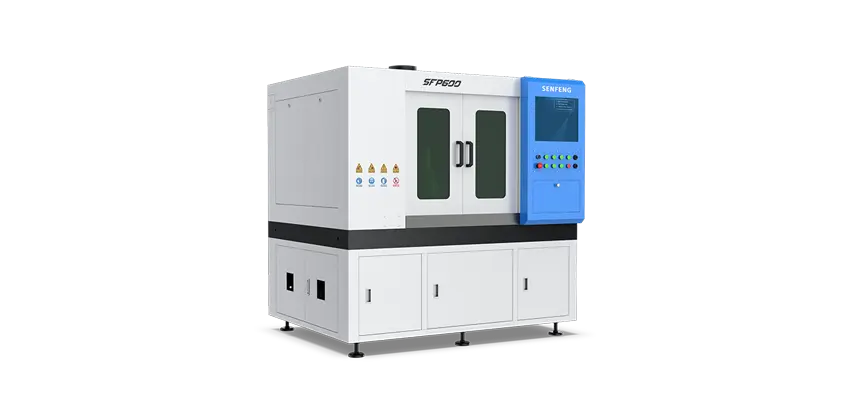
1. Compact Fiber Laser Cutting Machine SF1313G
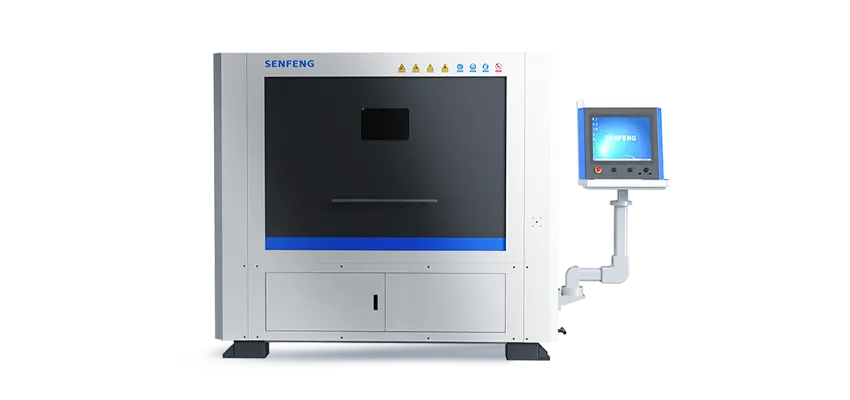
The SF1313G represents the compact configuration in the single table series. With its small footprint, it is designed for workshops with limited space, prototype development, and light manufacturing applications.
This model is widely used in small fabrication shops where flexibility and space efficiency are more important than continuous high-volume production.
Key advantages:
- Space-efficient workshop integration
- Lower initial investment cost
- Simple mechanical structure for easy maintenance
- Flexible job-shop production capability
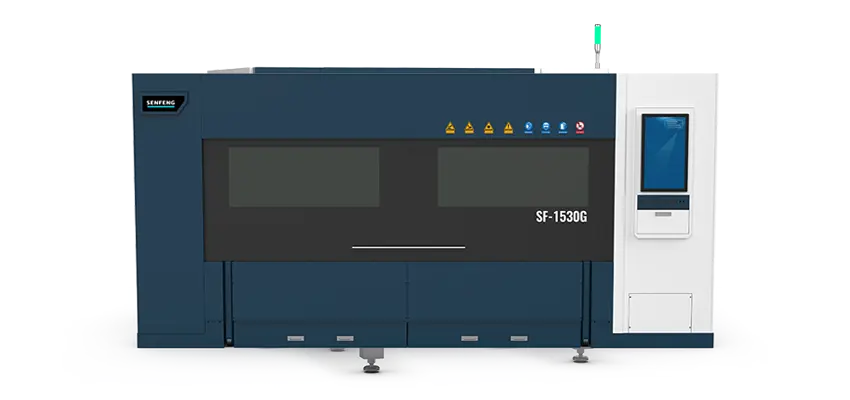
2. SF1530G – 5′ × 10′ Standard Fiber Laser Sheet Cutter
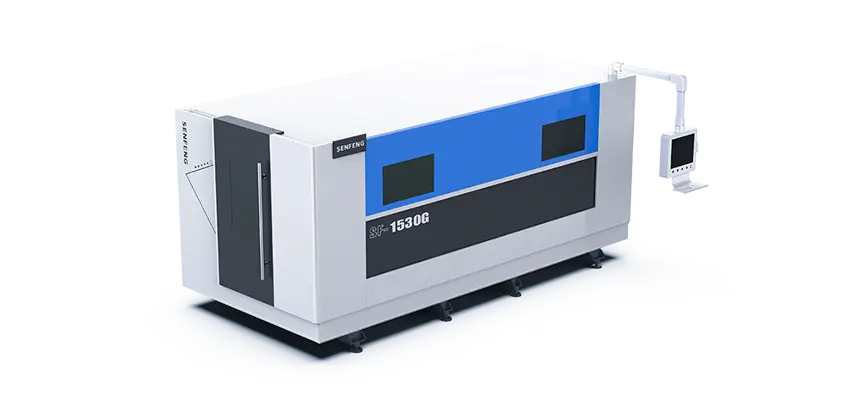
The SF1530G features a standard 5′ × 10′ working area, making it one of the most widely used industrial sheet formats for metal fabrication.
While maintaining the same single table workflow, it significantly improves material utilization and production efficiency when processing standard sheet sizes. It is commonly selected by workshops transitioning from small-batch production to more structured and scalable manufacturing.
Key advantages:
- Standard 5′ × 10′ industrial sheet format
- Improved material utilization efficiency
- Suitable for medium-scale production environments
- Smooth transition from job-shop to structured production
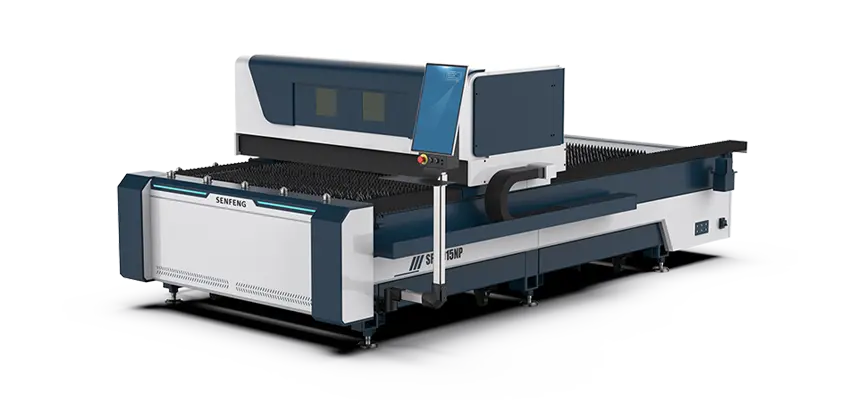
3. SF3015NP– 5′ × 10′ Open-Style Single Platform Fiber Laser Cutter
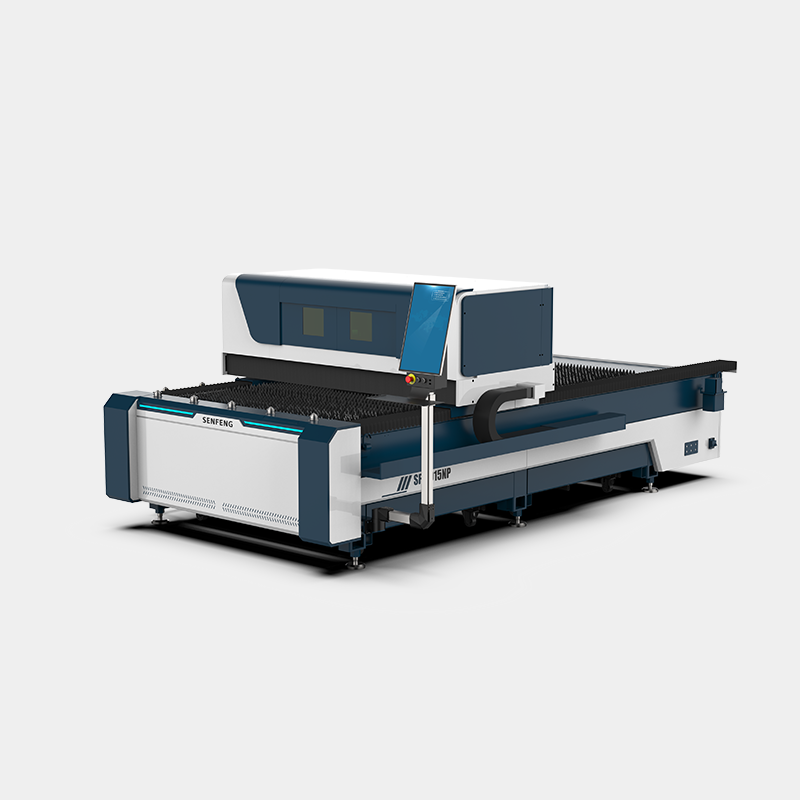
The SF3015NP is an open-style single platform fiber laser cutting solution designed for flexible sheet metal processing. Unlike enclosed models, it features an open-frame structure that allows full visibility of the cutting process and easy access for loading and unloading from multiple directions.
It is optimized for flexible production environments where accessibility, space efficiency, and cost control are key considerations.
Key advantages:
- Open-frame structure for easy operation and visibility
- Compact layout for efficient workshop integration
- Suitable for medium to thin sheet metal processing
- Lower equipment cost compared with enclosed automation systems
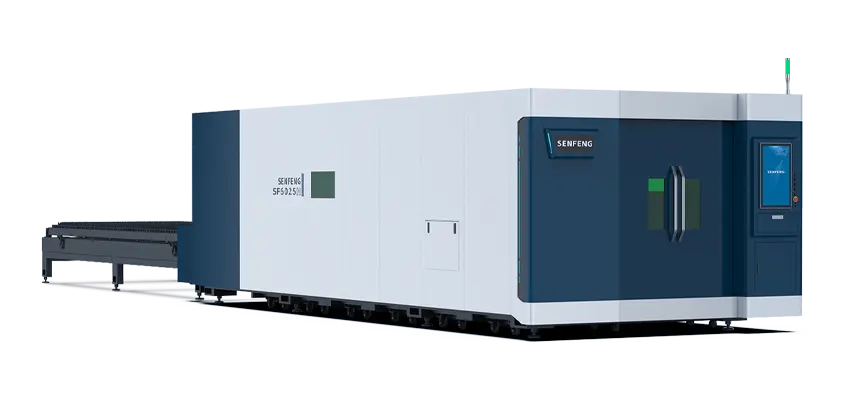
II. Exchange Table Fiber Laser Cutter: Parallel Workflow for Continuous Production
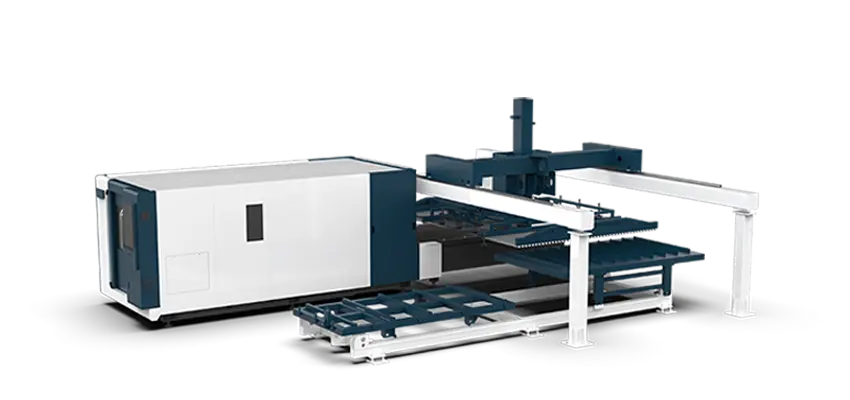
In an exchange table fiber laser cutting machine, a second loading platform is introduced to decouple cutting and material handling.
While one table is positioned inside the cutting chamber and actively processing a job, the second table remains outside the machine for unloading and preparation.
This enables preparation activities to occur in parallel with cutting.
When the cutting cycle ends, the exchange mechanism transfers the tables in a fully automated process, typically completed within 10 to 20 seconds depending on configuration.
Compared to the 2 to 5 minutes required for manual handling in a single table machine, the reduction in non-cutting time is structural rather than marginal.
In a production scenario of 40 sheets per shift, even a conservative 2-minute reduction per cycle results in approximately 80 minutes of recovered production time. Across multi-shift operations, this translates directly into increased throughput without changes in laser power or cutting speed.
More importantly, the exchange table machine increases machine utilization rate by maximizing the proportion of time the laser source spends actively cutting.
In real industrial configurations, this type of workflow is typically implemented on high-power fiber laser cutting platforms designed for continuous production environments.
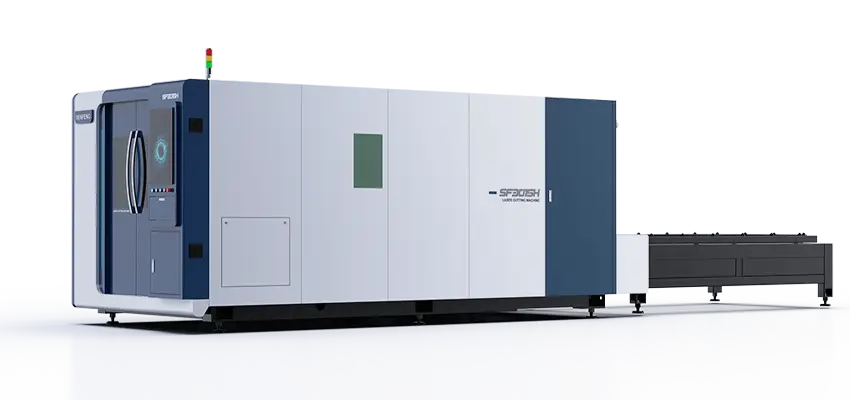
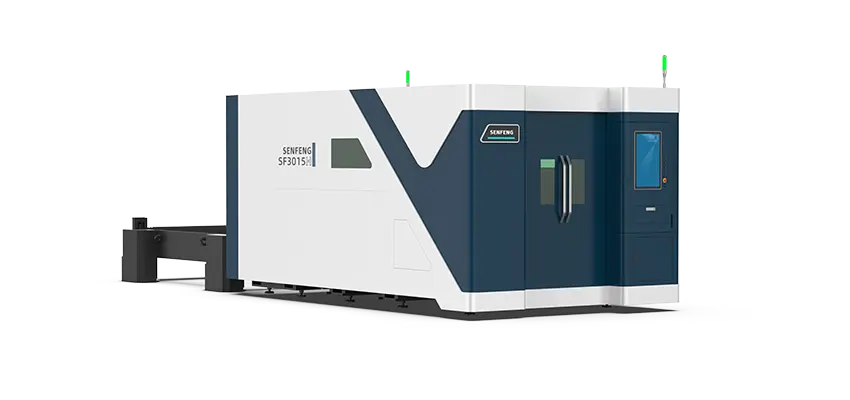
Featured SENFENG Solution: High-Power Fiber Laser Cutter (The Fourth Generation)
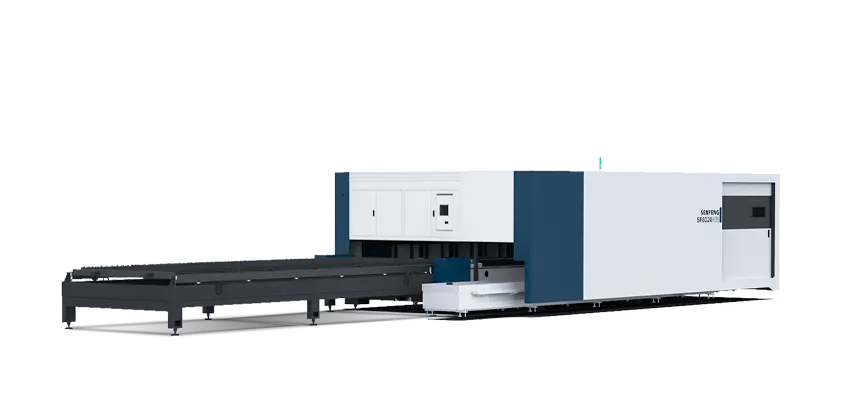
A representative example is the SF3015H high-power fiber laser cutting machine, which is built around a rigid frame structure and an exchange table configuration optimized for high-volume sheet metal processing.
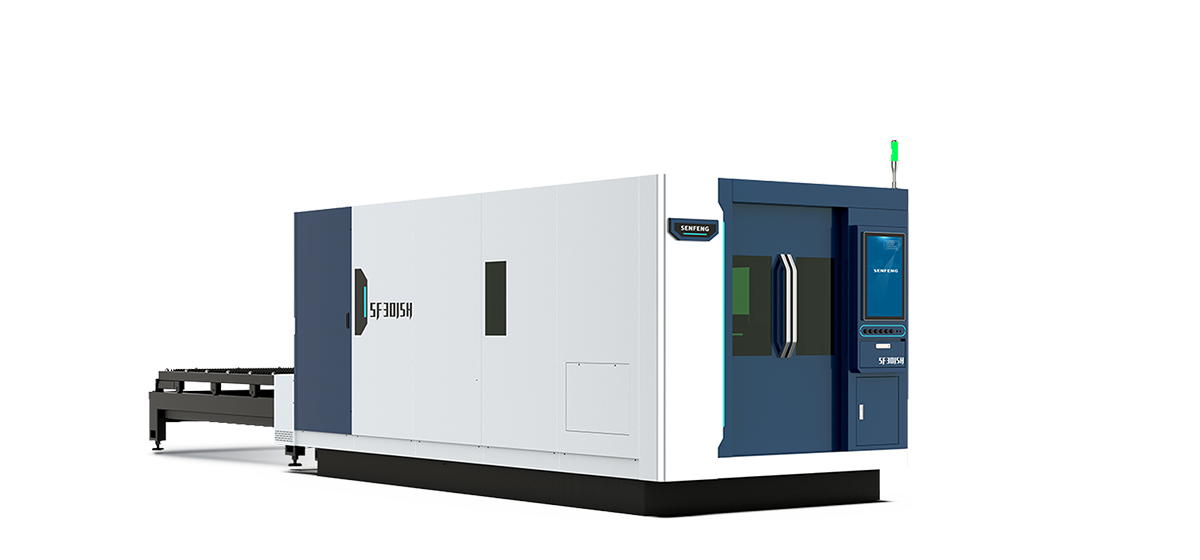
In such machines, the exchange mechanism is integrated into a production-oriented architecture where cutting stability, material handling efficiency, and long-cycle operation are treated as a unified workflow rather than separate functions.
In this type of setup, the exchange table machine is not treated as an optional accessory, but as part of the overall production strategy. It supports continuous sheet feeding, stable cutting cycles, and reduced operator idle time, making it suitable for environments where machine utilization rate is a primary performance indicator.
III. Structural Comparison: Single Table vs Exchange Table Fiber Laser Cutter
| Evaluation Dimension | Single Table Fiber Laser Cutter | Exchange Table Fiber Laser Cutter |
| Workflow Type | Sequential (Cut → Stop → Load → Restart) | Parallel (Cut + Prepare simultaneously) |
| Machine Footprint | Smaller, space-efficient | Larger due to dual table structure |
| Investment Cost | Lower initial cost | Higher initial cost |
| Production Efficiency | Dependent on operator handling time | Higher utilization through reduced idle time |
| Flexibility | High for small batch & variable jobs | Moderate, optimized for stable production |
| Changeover Speed | Fast for irregular jobs | Optimized for continuous cycles |
| Operator Dependency | Higher | Lower in continuous production |
| Best Application Scenario | Job shops, prototypes, mixed production | Mass production, stable batch manufacturing |
IV. Production Rhythm Difference: Cycle-Based vs Flow-Based Manufacturing
The distinction between single table and exchange table fiber laser cutters becomes most obvious when observing long production runs rather than individual jobs.
- Single table fiber laser cutters operate on a cycle-based rhythm where each job is followed by a manual transition phase. Even with optimized operators, this introduces repeated interruptions throughout the shift.
- Exchange table fiber laser cutters shift production toward a flow-based rhythm. Preparation and cutting occur simultaneously, and transitions are reduced to mechanical exchanges rather than manual intervention.
Over time, this changes not only machine output, but also workshop organization, operator workload distribution, and production planning stability.
V. Application-Based Selection Logic: Which Machine Is Best for You?
Choose a Single Table Fiber Laser Cutter when:
- Your production involves frequent material, thickness, and nesting changes.
- Your batch sizes are small, customized, or highly variable (prototyping).
- Your workshop floor space is limited or tightly integrated.
- Operational flexibility and low upfront costs are more important than continuous utilization.
Choose an Exchange Table Fiber Laser Cutter when:
- Your production runs are continuous, predictable, and run multi-shift.
- Sheet feeding and material handling are stable and repetitive.
- High daily throughput and maximizing laser beam-on time are your key metrics.
- Labor efficiency and minimizing operator downtime are critical to your ROI.
VI. Conclusion
From a technical standpoint, both machines deliver equivalent cutting performance in terms of precision, speed, and material compatibility. The real difference lies in how each configuration structures production time. Single table fiber laser cutters prioritize simplicity, compact design, and operational flexibility. Exchange table fiber laser cutters prioritize workflow continuity and reduce non-cutting time.
In real manufacturing environments, the optimal choice is determined not by machine capability alone, but by your production rhythm, batch structure, and overall throughput requirements.
Still Undecided Which Laser Cutter Fits Your Shop?
Choosing between flexibility and high throughput depends heavily on your current floor layout, material thickness, and annual production volume.
Let our professional engineers help you run a detailed production ROI analysis based on your specific sheet metal fabrication needs.Contact us today for a free technical consultation & quote.